---
title: "Choosing who makes the clothes"
description: "Choose a maker by checking relevant work, agreeing who handles each task, and comparing the same clothes, quantities and delivery plan."
url: "https://surajmalstudio.com/guides/choosing-a-manufacturer"
---
# Choosing who makes the clothes
7 min read Working with manufacturers Updated 10 Sept 2026
Choose a maker by checking relevant work, agreeing who handles each task, and comparing the same clothes, quantities and delivery plan.
## Quick answers from this guide
### What should I send a maker before asking for a quote?
Send a document that describes how the clothes should be made, with drawings, measurements and the intended fabrics. Give the quantity for each design in each colour, the cost the brand can carry and the delivery window. Mark anything still undecided. An early quote can test whether the plan is workable, with its assumptions recorded for later confirmation.
### How do I check whether a maker can make my clothes?
Ask a maker for examples that use similar fabrics and ways of making the clothes, then ask where your order would be made. A sample made from your instructions tests how the maker handles measurements, materials and corrections. Check the business records and relevant references separately. A good sample alone does not establish how the full order will be managed.
### What decides the smallest order a maker will accept?
The smallest workable order can come from the fabric as well as the maker. A custom colour, print or finish may need more fabric than one design uses. Ask for the minimum for each design and its fabric, with the reason behind it. Sharing a suitable fabric across designs or considering an available colour may change what is possible.
### How do I compare quotes from different makers?
Ask every maker to quote against the same version of the document describing the clothes, with the same quantities by design and colour. Compare the fabric, how the clothes will be made, labels, packing and checks included. Confirm where the finished order will be handed over. Keep suggested alternatives separate so that a changed product is visible in the comparison.
### What should the first conversation with a maker establish?
The first conversation should establish whether the clothes and quantities are workable, who will obtain the materials, and who will manage samples and production. It should identify open decisions and the evidence needed next. Ask how corrections are recorded, who handles delays and what the delivery date assumes about approvals. Record the agreed next step before moving towards an order.
Choose a maker whose relevant work, handling of samples and agreed responsibilities match the clothes the brand is planning to make. Compare their quote with others only when each describes the same clothes and quantities. The first conversation should make the work clearer: what can be made, what remains undecided and who will take each decision forward.
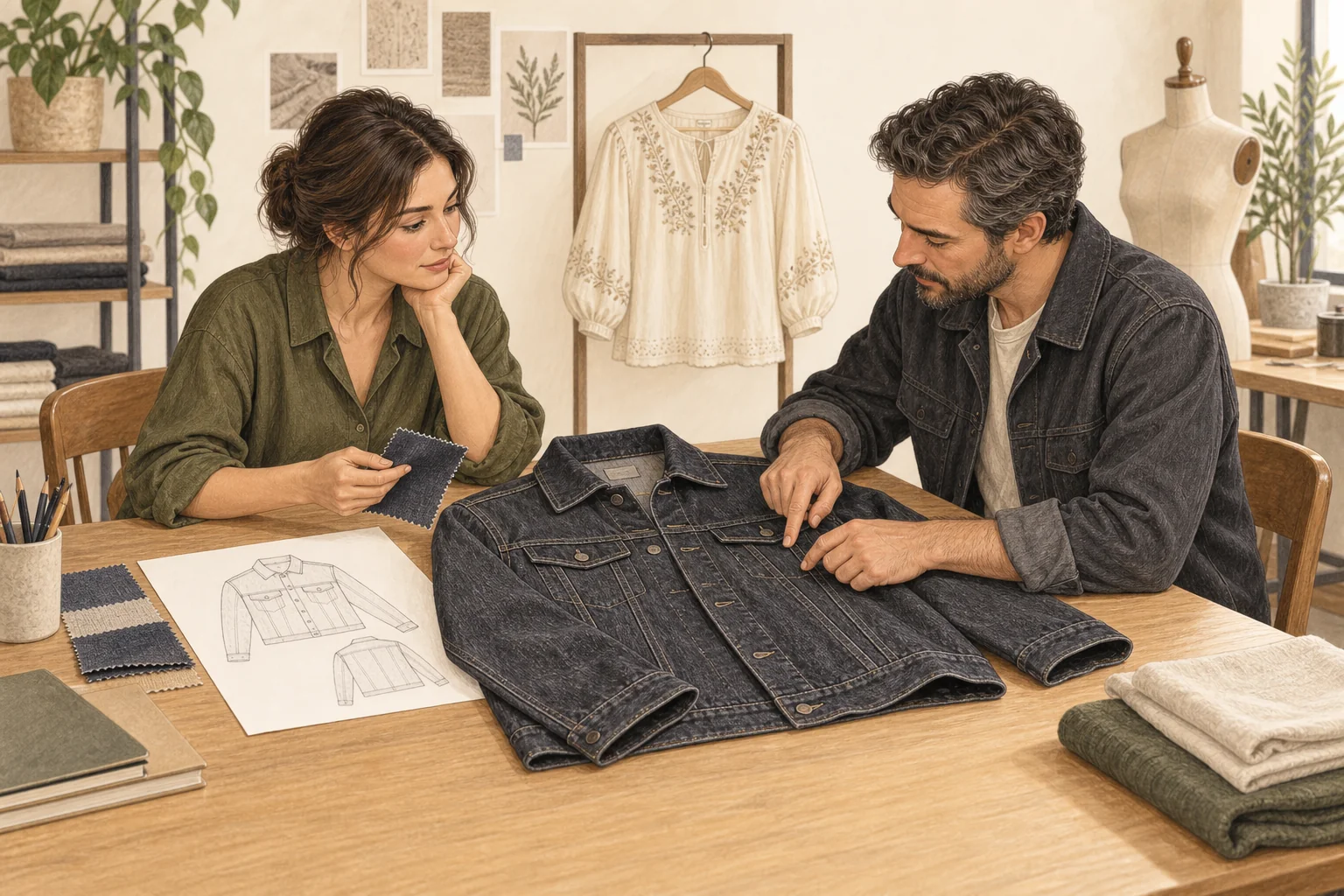
Studio illustration Use the product brief, relevant samples and written requirements to make the discussion concrete. A sample is one part of assessing a manufacturer, alongside capability, communication and commercial terms.
## 01Describe the clothes closely enough for a useful quote
Start with a working document that tells a maker what to make. Include a drawing showing how the item is put together, its measurements and how much variation is acceptable. Describe the fabric and any other materials used. Add the position of printed or embroidered artwork, label details and packing instructions where these are known. Mark the open decisions.
A reference image helps explain appearance. Measurements and making instructions give the maker something more specific to assess. Calling a fabric cotton leaves its weight, feel and finish unresolved. Ask the maker to identify which missing details affect the quote, and record any fabric they propose using in the calculation.
Give quantities for each design in each colour. If quantities are still moving, show the amount currently planned and the possible range.
State the cost the brand can carry after allowing for how the clothes will be sold and the costs of selling them. Include a delivery window that allows for samples and decisions before production.
## 02Agree who will obtain materials and manage the work
Different makers take on different parts of the job. Some make clothes from materials the brand supplies, following instructions the brand provides. That arrangement leaves the brand responsible for selecting and obtaining the fabric, getting it to the maker and resolving questions about it. Establish who will do that work before choosing this route.
Other arrangements include finding the materials and quoting for the finished clothes against an agreed description. A broader arrangement can also include turning the design into drawings, developing samples and coordinating production. Ask for the tasks in writing. A name given to a service cannot settle who handles a fabric problem or follows up a correction.
An intermediary may coordinate several makers or specialist processes. Ask who will make the clothes and which work will happen elsewhere. Identify who takes responsibility when work moves between them, including any separate washing or printing.
The brand still needs to approve the clothes and set the cost and delivery priorities. Name the person who gives those approvals. Then establish the contact for questions about measurements and materials, and the person who raises changes to the delivery plan.
## 03Relevant examples and a sample test different things
Build a small shortlist around the clothes being made. Referrals, fabric contacts and trade fairs focused on similar products can provide starting points. Search results and directories can help find names; follow them with evidence about the proposed work.
Ask to see clothes made with comparable fabric and construction. Experience with heavy denim does not establish the ability to make a lightweight embroidered item. If the example differs from your design, ask the maker to explain the difference and how they would handle it.
A sample made from your instructions tests another part of the work. Look at how the maker reads the document and raises missing information, as well as the resulting clothes. Check whether the measurements and materials match the version supplied. The next sample should show how corrections have been understood and carried through.
Ask to see the process for a similar item from the first enquiry to approval for production. A sample used to check fit serves a different purpose from the sample that production is checked against. Have the maker explain what each stage establishes and which decisions are needed before the next stage begins.
## 04The fabric can set the smallest workable order
Ask for the minimum a maker will run for each design, then ask about the fabric separately. A new colour, print or finish may require more fabric than that design uses. The maker may also have a minimum connected to preparing the work and obtaining details such as buttons or labels. Ask what creates each minimum.
Settle this before fixing all the colours or announcing a delivery date. Sharing a suitable fabric across compatible designs may make the planned quantities workable. An available fabric colour is another option to assess. For fabric already available, confirm the exact fabric and remaining quantity, then arrange to reserve it once approved.
The amount of fabric needed also depends on the measurements and the number of clothes in each size. How the pieces are arranged for cutting, and the extra fabric allowed during cutting, affect the calculation. A maker can calculate this more closely once those details are settled. Until then, ask for the fabric amount to be marked as provisional.
## 05Comparable quotes describe the same clothes and work
Send every maker the same version of the document describing the clothes. Ask them to state what is included and what is left out. Keep any suggested alternative separate, with the change explained, so the original design remains available for comparison.
Read the fabric description closely. Its fibre content, weight and finish should match across the quotes. Check the way the clothes will be made and any washing, printing or embroidery. Labels, fastenings and packing also need to be described. A quote using different materials or leaving out a treatment is pricing different work.
Ask what sample approvals and checks during production are included. Confirm the sample production will be checked against and how the checks will be recorded. The quantity for each design and colour must match too. Establish where the finished order will be handed over and what handling is included up to that point.
A lower quote may follow a useful change, such as choosing an available fabric or revising the packing. Make that change visible and decide whether it still suits the clothes. Treat an early estimate as a starting calculation, with its open assumptions recorded. Confirm those assumptions before accepting the final quote.
## 06Check the business and the place making the clothes separately
Match the business name and address on the quotation with its registration records, invoice details and payment instructions. Where the business taking the order differs from the place making the clothes, ask for the relationship to be explained and recorded. Resolve unexplained differences before approving payment details.
Ask which place will carry out each part of the work. A live video walk-through can show relevant equipment and work in progress, along with how materials are received and finished clothes are checked. Request a view of the work connected to your order.
If a certificate is offered as evidence, request the complete current document. Check the named business and address, what products and activities it covers, and its validity. An assessment of working conditions needs similar attention to the place assessed, the findings and the record of corrections.
Request relevant references and confirm their contact details independently. Ask whether sample corrections were followed, whether the finished order matched the approved sample and how delays were handled. If payment instructions later change, verify the change independently through a known contact before sending money.
## 07Samples and approvals belong inside the delivery plan
Ask for a schedule that begins with agreeing the description of the clothes. It should allow for submitting materials for approval, reviewing the sample and making another sample where needed. Then show approval for production, booking materials and the checks before the completed order is released.
The first sample can reveal questions about fit, how the fabric behaves or how the clothes are made. A change to a material or the shapes used to cut the fabric creates another decision. If approval moves, fabric booking and the maker's available production time can move too.
Keep sample comments in a single record. Identify the sample version, describe each issue and say what correction is required. Mark which points are approved and which remain open. Record changes to measurements and materials alongside the comments, so the maker can work from the current instructions.
Agree who will raise a delay and explain its effect on the remaining work. A useful response identifies the decision needed and who must make it. Review the timing again when a material changes, since a correction made after fabric has been committed may affect both cost and delivery.
## 08End the first conversation with open decisions recorded
A useful first conversation produces a clearer description of the order and a next step. Record whether the proposed clothes and quantities are workable, who will handle the materials and what still needs a decision. Note which relevant examples or documents the maker will provide, and what must be agreed before a sample starts.
Pay attention to the questions the maker asks. Questions about fabric weight, sizes or how a print will be made help narrow the work. Ask for the assumptions behind a confident answer, especially when the description of the clothes still has gaps.
Pause if the maker will not identify where the clothes will be made, avoids a sample made from the agreed instructions, or provides conflicting records. Ask for the missing evidence or explanation. Pressure to skip the sample or accept an unverified change to payment details is also a reason to stop and resolve the issue.
Before choosing, make a comparison row for each shortlisted maker: relevant sample seen, production location confirmed, scope agreed, material assumptions, delivery conditions and unresolved question. A maker with a strong shirt sample but no evidence for stretch activewear still has a product-specific question to answer. Request the missing evidence instead of ranking every supplier by price alone.
[Subscribe to new guides on the website.](https://surajmalstudio.com/guides/choosing-a-manufacturer)
Working on a range
Get help turning the next decision into a practical plan.
[Talk about your idea](https://surajmalstudio.com/enquire)
## Read next
### [How can a manufacturer be checked before sending money?](https://surajmalstudio.com/guides/how-do-i-know-a-manufacturer-is-real)
Check the business records, factory, sample and payment details together, with separate decisions before paying for a sample and before ordering the clothes.
### [Is it necessary to visit the factory?](https://surajmalstudio.com/guides/should-i-visit-the-factory)
A factory visit can deepen the checks on a maker, but the decision to order also needs samples, records and evidence about the production site.
### [Changing manufacturer without losing the product](https://surajmalstudio.com/guides/changing-manufacturer)
Keep the clothes consistent by transferring their approved records, settling access to patterns, and testing the new maker before moving the main order.
### [Choose who buys the fabric and develops the clothes](https://surajmalstudio.com/guides/cmt-or-full-package-for-a-first-order)
Use the state of your first design to choose the work you need, then assign each material and approval.
Read next [How can a manufacturer be checked before sending money? 4 min read · Working with manufacturers](https://surajmalstudio.com/guides/how-do-i-know-a-manufacturer-is-real) [Is it necessary to visit the factory? 4 min read · Working with manufacturers](https://surajmalstudio.com/guides/should-i-visit-the-factory) [Changing manufacturer without losing the product 7 min read · Working with manufacturers](https://surajmalstudio.com/guides/changing-manufacturer) [Choose who buys the fabric and develops the clothes 3 min read · Working with manufacturers](https://surajmalstudio.com/guides/cmt-or-full-package-for-a-first-order)
---
[View this page on the website](https://surajmalstudio.com/guides/choosing-a-manufacturer)