---
title: "How the price of making a garment is built"
description: "A garment quote combines materials, making, packing and agreed services; quantity changes how preparation costs and material minimums are shared across the clothes."
url: "https://surajmalstudio.com/guides/how-a-garment-price-is-built"
---
# How the price of making a garment is built
7 min read Costs, orders and delivery Updated 10 Sept 2026
A garment quote combines materials, making, packing and agreed services; quantity changes how preparation costs and material minimums are shared across the clothes.
## Quick answers from this guide
### What goes into the price a maker quotes for a garment?
A garment quote can include fabric, buttons and other attached parts, the work of making the clothes, packing, running costs and the maker's margin. Samples, tests and delivery work need their own clear treatment. Ask what is included and who supplies each material, because a quote for making clothes from fabric you supply covers different work from a quote that includes buying it.
### Does ordering more clothes reduce the price of each garment?
A larger order can spread preparation work across more garments, but each garment still uses materials and needs making. The quantity of each design and colour matters alongside the total. Fabric and customised parts can have separate minimum orders, so changing the colour split can change the price even when the total number of clothes stays the same.
### Why can a cheaper fabric leave the garment price higher?
The fabric cost in a garment reflects how much cloth is needed as well as its price per metre or kilogram. A cheaper cloth may be narrower or leave more unused fabric when the pieces are cut. Matching stripes or prints can also affect how much is needed. Compare the fabric cost for the finished garment, including expected loss and any minimum order.
### Can the price change after a sample is approved?
A maker can revise a quote when the approved sample changes the materials, the amount of fabric needed or the work of making the garment. Packing and order quantities can also change the calculation. Each revision should identify the changed decision and the affected cost, with a date and a link to the current measurements and sample.
### How can two makers' quotes be compared fairly?
Ask both makers to price the same garment, with the same fabric, measurements and attached parts. Give them the same quantities by design, colour and size, and the same packing and delivery instructions. Check how each quote treats samples, tests and inspection. A lower total becomes a useful comparison once the included work and the assumptions behind it match.
The price of making a garment combines its materials, the work of turning them into clothes, packing and the maker's running costs and margin, plus any agreed services or delivery work. Some of that work is preparation that can be shared across an order. Other costs follow every garment made.
The number needs a description beside it. A quote for a jacket means little until it says which fabric, how the jacket is made and how many are being ordered. Ask for a written breakdown that connects the total to those decisions. The maker may combine some costs, but the assumptions that move the price should remain visible.
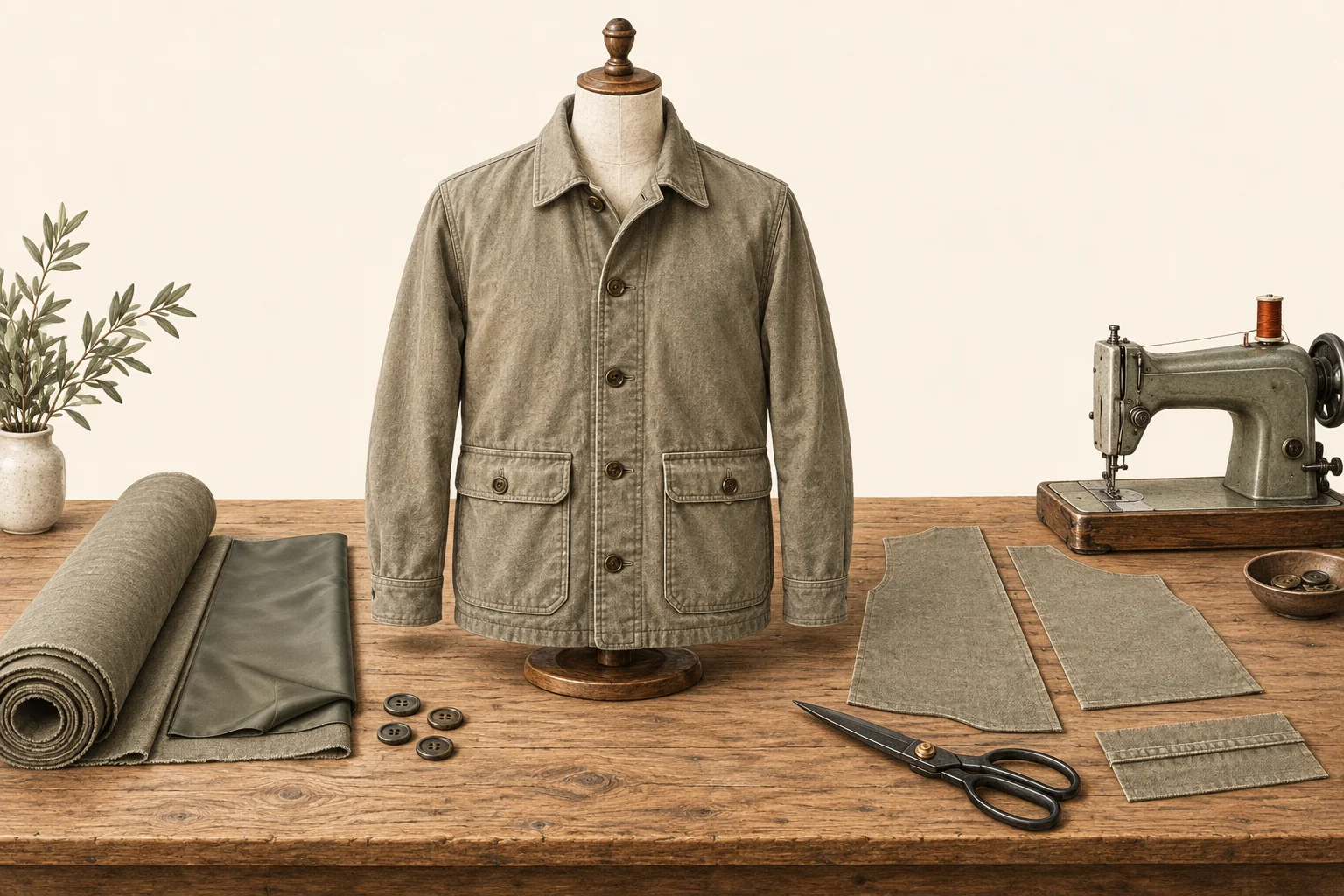
Studio illustration Fabric, components and making operations contribute to the garment price. Compare quotes for the same specification and check what each quote includes.
## 01Fabric cost starts with how much each garment uses
Fabric can be a major part of the price; its share depends on the garment and the work included. Its cost per metre or kilogram is only the starting point. The maker also calculates how much is needed for each garment, using the shapes of the pieces to be cut and their arrangement across the cloth. That calculation needs an allowance for material lost during cutting and other work.
Width matters. A fabric with a lower price per metre can require more metres if its usable width is narrower. Stripes, checks and prints that must face a particular way can leave less freedom to fit the pieces together. Matching a pattern across the clothes can change the amount of cloth needed, even when the measurements stay the same.
Ask the maker to show the fabric price and its unit of measurement, the amount used per garment and the allowance for loss. Check whether that allowance is already included in the amount shown. The calculation should also state which sizes it covers, because the size split affects fabric use.
Keep a description or approved piece of the fabric with the quote. Fibre content alone leaves too much open: the fabric's weight, how it is knitted or woven, and its finish also affect the calculation. Once the fabric and the shapes to be cut are settled, ask the maker to review the estimate against them.
## 02Buttons, labels and packing need their own descriptions
Small parts still need to be priced against a clear choice. A printed size label and a woven brand label are different items. “Labels included” leaves that choice unresolved. Ask for a list of the parts included in the garment, with the quantity of each and a note of anything still awaiting approval.
A button or zip can have its own minimum order. A customised label also needs agreed artwork, while a drawcord may need an agreed colour. Adding a branded detail can change both the material cost and the work needed to attach it. Its position belongs in the description the maker is pricing.
Packing extends beyond the bag around the clothes. Tissue and special folding can change the materials and finishing work. The number and mix of garments in each box also need to be agreed, together with the information printed on the outside. A change to the fold or the box contents can affect the final packing work.
Settle the packing alongside the sample that production will be checked against. Ask the maker to identify what the quoted packing includes and which details remain provisional. That gives a later request for different presentation a clear starting point for recalculation.
## 03Making costs follow the work in the garment
The charge for making covers the work of turning the agreed materials into finished, packed clothes. It reflects the equipment needed and the sequence of tasks, as well as the amount of preparation shared across the order. There is no single making rate that describes every garment.
A lined jacket involves different work from a basic T-shirt. Pocket construction and seam choices affect that work. Embroidery, a print that must sit in a particular position or a wash applied to the clothes can add further tasks and checks. Pressing also belongs in the calculation.
Changes to a sample therefore need to reach the price breakdown. An added pocket changes the work as well as the materials. A revised collar can change the construction. When measurements or fit change, ask the maker to review both fabric use and making costs against the accepted sample.
The quote also needs room for the maker's running costs and margin. Managing quality and disruption is part of delivering the order. A maker does not have to show every internal cost separately for the quote to be useful. The included work and the assumptions supporting the total still need to be clear.
## 04Quantity spreads preparation work but leaves material needs
Preparing to make a design takes work that can be spread across the garments in the order. Increasing the quantity can reduce the preparation cost carried by each garment. It does not remove the fabric used in each piece or the work needed to make it. The whole price does not fall in the same proportion as the order grows.
Minimum orders complicate the calculation. The business producing the fabric may need a viable run for a particular colour or finish. A business making customised buttons or labels can have a separate minimum. The maker also needs enough garments to prepare and manage production efficiently. Ask which minimum belongs to which part of the order.
The total number of clothes is not enough. Record the quantity of each design, then the colours and sizes within it. Each additional colour can bring separate fabric ordering and approval work. Keeping the total unchanged while moving most garments into one colour and leaving small quantities in others can change the price.
Some choices can reduce the burden of those minimums. Ask the maker to price an available fabric, or whether the same material could be shared across designs. Fewer colours may offer another route. Keep these as separate options, with their assumptions written down, so a change in price can be traced to the change in the clothes.
## 05Samples, checks and delivery must be named in the quote
A quote can include buying fabric and arranging the other parts, or it can cover making clothes from materials the brand provides. These totals contain different work. Record who supplies each material, and confirm how material transport and expected loss are treated when the brand supplies or selects the fabric.
Samples need a clear allowance too. Ask what sample work is covered, how many rounds of changes the quote allows and what would trigger an additional charge. Testing and inspection need the same clarity: who arranges them, what activity is included and what the clothes will be checked against. Record how faults will be handled.
Delivery needs a named place and an explanation of the work included. Clothes available at the maker's premises and clothes delivered to an agreed destination do not cover the same responsibilities. Confirm the packing and paperwork included in the arrangement. Ask for a revised quote when delivery instructions differ between makers; a guessed shipping allowance leaves other differences unresolved.
The price of making the clothes also needs to stay distinct from the wider calculation of getting them to their destination. Transport, insurance and destination charges need checking for inclusion. Record how long the quote remains valid, when material prices will be confirmed and the agreed payment timing.
## 06A changed quote should point to a changed decision
The first quote uses the information available when it is written. A drawing and measurements may leave the fabric finish or packing unresolved. Ask the maker to mark those assumptions so the estimate can be reviewed as decisions are approved. A provisional choice should remain visible on the page.
Later changes need a reason. Replacing fabric can change its price, the amount needed and the minimum order. An approved sample may introduce extra sewing work or a wash. A different size split can alter fabric use without changing the design itself. Each of these gives the maker something specific to recalculate.
Keep a dated version of the breakdown with each material or sample decision that affects it. Ask the maker to identify the affected line and explain the change. Where the total moves without an explanation, check it against the latest agreed description of the clothes before approving it.
The price and the instructions for making the garment need to describe the same version. Keep the current measurements and approved sample reference beside the quote. This makes it possible to check whether the number still covers the clothes that have been agreed.
## 07Comparable quotes describe the same clothes and order
Send each maker the same document describing what to make. Include the chosen fabric and measurements, with the attached parts and packing clearly described. Give the quantities by design, colour and size. If a material choice remains open, ask for a separately described option so its effect on price stays visible.
Compare the included work before comparing the totals. Check the fabric calculation and expected loss, then resolve differences in samples, checks and delivery. An excluded charge can be handled once it is identified. Leaving it unstated makes the headline number an incomplete basis for choosing.
A price difference can remain after the assumptions match. It may reflect a more efficient way of making the clothes or a different level of service. Ask what explains it. Before approving the quote, keep a record of the agreed garment, the exclusions and any approvals still needed, with the quotation version attached. That is the reference for deciding whether a later change should move the price.
[Subscribe to new guides on the website.](https://surajmalstudio.com/guides/how-a-garment-price-is-built)
Working on a range
Get help turning the next decision into a practical plan.
[Talk about your idea](https://surajmalstudio.com/enquire)
## Read next
### [How to compare clothing manufacturer quotes](https://surajmalstudio.com/guides/comparing-clothing-manufacturer-quotes)
Compare the same product and scope, make exclusions visible and resolve open questions before choosing a manufacturer. Includes a blank comparison sheet.
### [What affects design and sampling costs?](https://surajmalstudio.com/guides/what-drives-development-cost)
Understand what you pay for before production, what can be shared and how to plan the work for your first collection.
### [Why do two manufacturers quote such different prices?](https://surajmalstudio.com/guides/why-do-quotes-differ-so-much)
Clothing quotes differ when makers price different materials, work or order details; a useful comparison makes those assumptions match before judging the price.
### [A small first run, or a full production order](https://surajmalstudio.com/guides/small-run-or-full-production)
A small first run suits clothes whose materials and making work at that quantity; a larger order suits a settled design with larger material and preparation commitments.
Read next [How to compare clothing manufacturer quotes 4 min read · Costs, orders and delivery](https://surajmalstudio.com/guides/comparing-clothing-manufacturer-quotes) [What affects design and sampling costs? 5 min read · Costs, orders and delivery](https://surajmalstudio.com/guides/what-drives-development-cost) [Why do two manufacturers quote such different prices? 4 min read · Costs, orders and delivery](https://surajmalstudio.com/guides/why-do-quotes-differ-so-much) [A small first run, or a full production order 7 min read · Costs, orders and delivery](https://surajmalstudio.com/guides/small-run-or-full-production)
---
[View this page on the website](https://surajmalstudio.com/guides/how-a-garment-price-is-built)