---
title: "How many samples come before production?"
description: "There is no fixed sample count: the number follows the checks needed to approve the design, fit, sizes and finished clothes before production."
url: "https://surajmalstudio.com/guides/how-many-samples-before-production"
---
# How many samples come before production?
4 min read Developing your product Updated 8 Sept 2026
There is no fixed sample count: the number follows the checks needed to approve the design, fit, sizes and finished clothes before production.
## Quick answers from this guide
### How many samples are needed before clothing production?
There is no fixed number of samples before clothing production. A repeat design may combine checks, while a new fabric, fit, print or wash can need more rounds. The work covers how the clothes are made, how they fit, the other sizes and a complete sample made with the materials and methods intended for production.
### Can the first sample also be used to check fit?
A straightforward design in an available fabric can use the same first sample to check how it is made and its initial fit. Record design changes separately from measurement corrections. The intended fabric should be used for fit checks wherever possible, because its weight, stretch and the way it hangs affect how the clothes fit.
### Does approving one size approve all the sizes?
Approving one size does not approve the full set of sizes. Once the starting size and the planned measurement changes between sizes are settled, samples in the other sizes check that the proportions still work. Measure each size and compare the shapes, particularly where the clothes have shaped panels, stretch fabric or complicated waistbands.
### Can a sample made for photography approve production?
A sample made for photography shows the intended appearance of the clothes. It can be made before all the materials for production are available, so its approval does not authorise production. Production needs a complete sample using the approved fabric, buttons or other parts, labels, finishing and intended making method, with packaging checked too.
### What should happen when a sample needs changes?
Send the maker one agreed written response identifying the sample version, the problem and the required change. Include measurements or photographs where they clarify the instruction, and record anything still undecided. Update the document that tells the maker what to make before the next sample begins, then check the next version against those comments.
There is no fixed number of samples before production: the count depends on what needs to be checked, which checks can share a sample and how many changes follow each review. A repeat design may combine stages. A new fabric, fit, print or wash can need more rounds before the clothes are ready to make.
Agree the purpose of each sample with the maker before requesting it. A sample might test whether a pocket can be made as drawn, whether the clothes fit, or whether the finished piece can be repeated using the chosen materials. Giving each round a decision makes the count useful. Another parcel alone says little about progress.
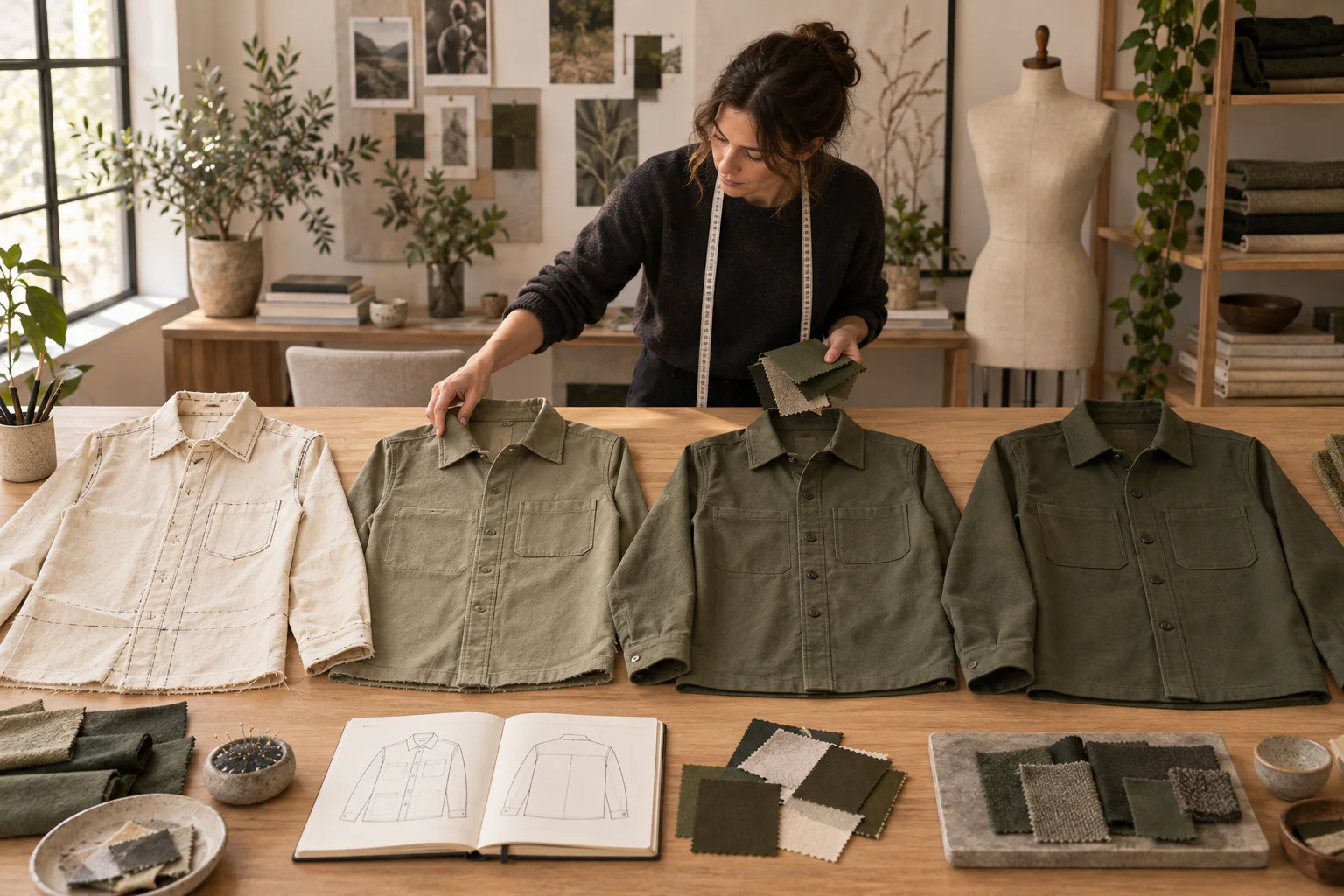
Studio illustration Sampling resolves different questions about shape, fit, materials and finish. The number of rounds depends on what each sample proves; production should follow a clearly approved version.
## 01The first sample checks whether the design works as clothing
The first sample turns the design into something that can be examined and worn. It checks the shape and how the pieces join, including details such as the collar, pocket position and thickness of the seams. A substitute fabric or temporary button can be acceptable here if the intended material is unavailable. Record the substitution so the approval is clear.
Before the maker starts, put enough detail into the document that tells them what to make. Include the starting size and its measurements, alongside the design and intended fabric. Show how details should be made and where artwork belongs. Record the labels and packaging requirements, and mark anything still undecided. A sketch can show the overall shape while leaving the pocket size or print direction unanswered.
Review the sample on a stand and on the intended wearer or a body form used for fitting. Separate changes to the design from corrections to the maker's interpretation. Moving a pocket because the design has changed gives the next sample a different purpose from correcting a pocket that was placed incorrectly.
## 02Fit can take several rounds, and other sizes need checking
A straightforward design in an available fabric may use the first sample to check both the making and the initial fit. Keep the comments separate. More complicated or new designs can need several rounds, with each version checked against the changes requested on the previous one.
Use the intended fabric for fit checks wherever possible. Its weight, stretch and the way it hangs affect the result, as do shrinkage and how well it returns to shape after stretching. A fit approval made in substitute fabric leaves the effect of the intended fabric to be checked.
Measure the sample against the agreed measurements, then assess it on the wearer or fitting form. Write the problem and the required correction clearly. A comment about where the shoulder needs to move gives the maker something to change; a general comment that the fit feels wrong leaves the instruction unresolved.
Once the starting size is settled, check samples across the other sizes. The planned changes in measurements must preserve the proportions of the clothes. Approval of the starting size does not prove that smaller and larger sizes work, especially with shaped panels or complicated waistbands. These checks belong in the sample plan even when the first size fits well.
## 03A sample for photographs approves the appearance
A sample made for photographs or showing the clothes to shops has a different purpose. It presents the selected fabric and colour, with the intended details and artwork, so the clothes can be reviewed for selling. Feedback and orders can inform how many pieces to make and the mix of colours.
That sample may exist before every material intended for production is available. Record any differences from the clothes the maker will produce. An image approved for the website cannot settle a fabric or button choice that remains open.
## 04Production starts from a complete approved sample
Before production, approve a complete sample made in the fabric intended for the order, using the chosen buttons or other parts, labels and making method. It should also show the intended print, wash or other finish. Check the packaging alongside it. This is the sample that production is checked against.
Check its measurements as well as its appearance. Compare the fabric's colour and feel with what was agreed, and check the placement and function of the details. Close each open point or explicitly agree how it will be handled before releasing production. The written approval must make the next action clear.
Keep the physical sample protected, dated and identified by design, colour and size, together with the current measurements and agreed comments. Photographs help communicate details, but cannot replace a physical comparison of fabric feel, stretch or construction. Changes after fabric has been cut can affect cost, waste and delivery timing, so establish their consequences with the maker before agreeing the next action.
## 05Count resolved decisions and keep one record of changes
Give one person responsibility for combining feedback into a single response. Record the sample version and date received, the decision, requested changes and remaining open points. Set the date for the next action. Add changes agreed in calls to the same record before another sample begins, and keep its version consistent with the document that tells the maker what to make.
There is a further sample check after production begins. A piece taken from the clothes being made is compared with the approved sample early enough for a problem to be addressed. This checks whether production is repeating what was agreed. Keep it separate when discussing how many samples come before production: it answers a question that only the clothes being made can settle.
[Subscribe to new guides on the website.](https://surajmalstudio.com/guides/how-many-samples-before-production)
Working on a range
Get help turning the next decision into a practical plan.
[Talk about your idea](https://surajmalstudio.com/enquire)
## Read next
### [How clothes get checked before they ship](https://surajmalstudio.com/guides/checking-clothes-before-they-ship)
An inspection checks finished clothes against what was approved; its findings decide whether the order can ship or needs correction and another check.
### [Does a manufacturer need a tech pack before quoting?](https://surajmalstudio.com/guides/do-i-need-a-tech-pack)
A maker needs clear written instructions to quote meaningfully; unfinished choices can stay open if the quotation records its assumptions.
### [From a sketch to the first real sample](https://surajmalstudio.com/guides/from-sketch-to-first-sample)
How a drawing becomes a garment, what the first sample can prove, and which written approvals carry the clothes through to production.
### [What to decide before a specification](https://surajmalstudio.com/guides/what-to-decide-before-a-specification)
Put the retail position first, decide what the product must protect, then turn those choices into a specification that can control them.
Read next [How clothes get checked before they ship 7 min read · Developing your product](https://surajmalstudio.com/guides/checking-clothes-before-they-ship) [Does a manufacturer need a tech pack before quoting? 5 min read · Developing your product](https://surajmalstudio.com/guides/do-i-need-a-tech-pack) [From a sketch to the first real sample 7 min read · Developing your product](https://surajmalstudio.com/guides/from-sketch-to-first-sample) [What to decide before a specification 8 min read · Developing your product](https://surajmalstudio.com/guides/what-to-decide-before-a-specification)
---
[View this page on the website](https://surajmalstudio.com/guides/how-many-samples-before-production)