---
title: "What affects design and sampling costs?"
description: "Understand what you pay for before production, what can be shared and how to plan the work for your first collection."
url: "https://surajmalstudio.com/guides/what-drives-development-cost"
---
# What affects design and sampling costs?
5 min read Costs, orders and delivery Updated 12 Sept 2026
Understand what you pay for before production, what can be shared and how to plan the work for your first collection.
## Quick answers from this guide
### What is the difference between development and production cost?
Development covers the work needed to design, sample and approve a product. Production covers making the stock. Ask for them to be shown separately so you can see what is included and when you commit to it.
### What makes design and sampling cost more?
Different styles, materials, colours, sample rounds and construction details create different tasks. A quote should identify those tasks and explain what is included.
### How can I reduce development work?
Consider fewer styles and colours, suitable shared patterns or materials, and earlier decisions. Confirm which work can be reused, and keep the checks needed to approve the product.
## 01Budget for development and production separately
Before clothes can be made for sale, the design has to become a tested set of making instructions. Development pays for that work: patterns, materials, samples, fit reviews and agreed specifications. Production pays for making the stock once those decisions are ready.
The main development costs depend on how many different styles, fabrics, colours and sample rounds you need. Ordering more finished garments may change the production price per piece. It does not remove the work needed to develop the design.
### Compare two possible collections
A shirt in two colours may share its pattern and fit work, while needing separate colour approvals. A shirt and a trouser need different pattern and fit work, even if both use the same fabric. The number of products alone does not tell you what development will cost.
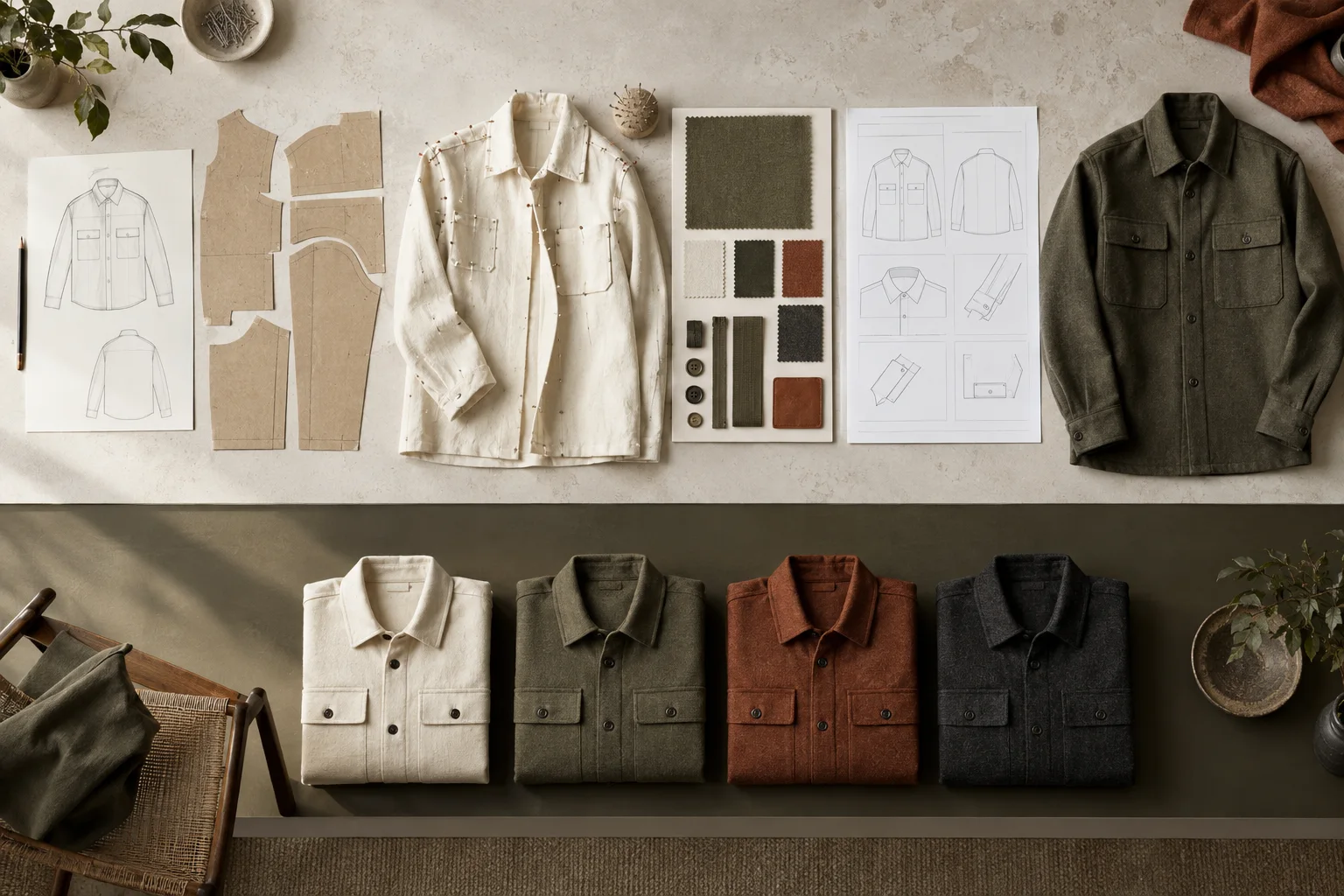
Development defines and approves a product. Production makes the stock after that product has been approved. Budget for both separately.
## 02Know what development pays for
- **Patterns:** the shapes used to cut the fabric pieces.
- **Size development, or grading:** adapting the approved starting size into the other sizes.
- **Samples and fit reviews:** making trial garments, checking them and recording changes.
- **Material sourcing:** finding and agreeing fabrics, buttons, labels and other components.
- **Colour approval:** checking the intended colour in the chosen material.
- **Making instructions:** drawings, measurements, materials and construction details for each style.
- **Production preparation:** checking the intended production materials and making method before the order starts.
Ask what is included in each quote. A single development total can hide different assumptions about sourcing, sample rounds, tests or the files you receive.
## 03Count the work behind each style
Each distinct style may need its own pattern, measurements, samples and instructions. A jacket with a lining and several fastenings can need more development than a simple top. Count the tasks as well as the designs.
Review the [first collection plan](https://surajmalstudio.com/guides/planning-a-first-range) before expanding it. Every piece should have a useful role, and enough time and budget for its development.
Distinct styles often need separate development. Shared patterns and materials can reduce some work when they suit the designs.
## 04Identify what the styles can share
A block is a starting pattern with an established fit. Related designs may be developed from the same block, so the team can build on earlier work. Changes still need checking: a different fabric or construction can change how the garment fits.
Common fabrics, buttons and finishes may also reduce sourcing and approval work. Ask the team to identify those savings in the scope. Putting unrelated products in the same collection does not create a saving by itself.
## 05Check what each colour adds
A colourway is one colour version of a design. It may reuse the pattern, but the fabric colour and matching components still need approval. Different dyes, washes or finishes may also need separate performance checks.
Each colour adds a stock decision across the sizes being sold. Ask what material minimum, sample work and approval each additional colour requires.
## 06Ask about fabric minimums
A supplier may require a minimum fabric order for each quality and colour. Several styles can sometimes share that order. Check that the fabric works for every garment and that the combined requirement meets the supplier’s terms.
Record any unused fabric, storage or additional material commitment separately from the development fee. Our [minimum-order guide](https://surajmalstudio.com/guides/what-is-an-moq) explains the distinction.
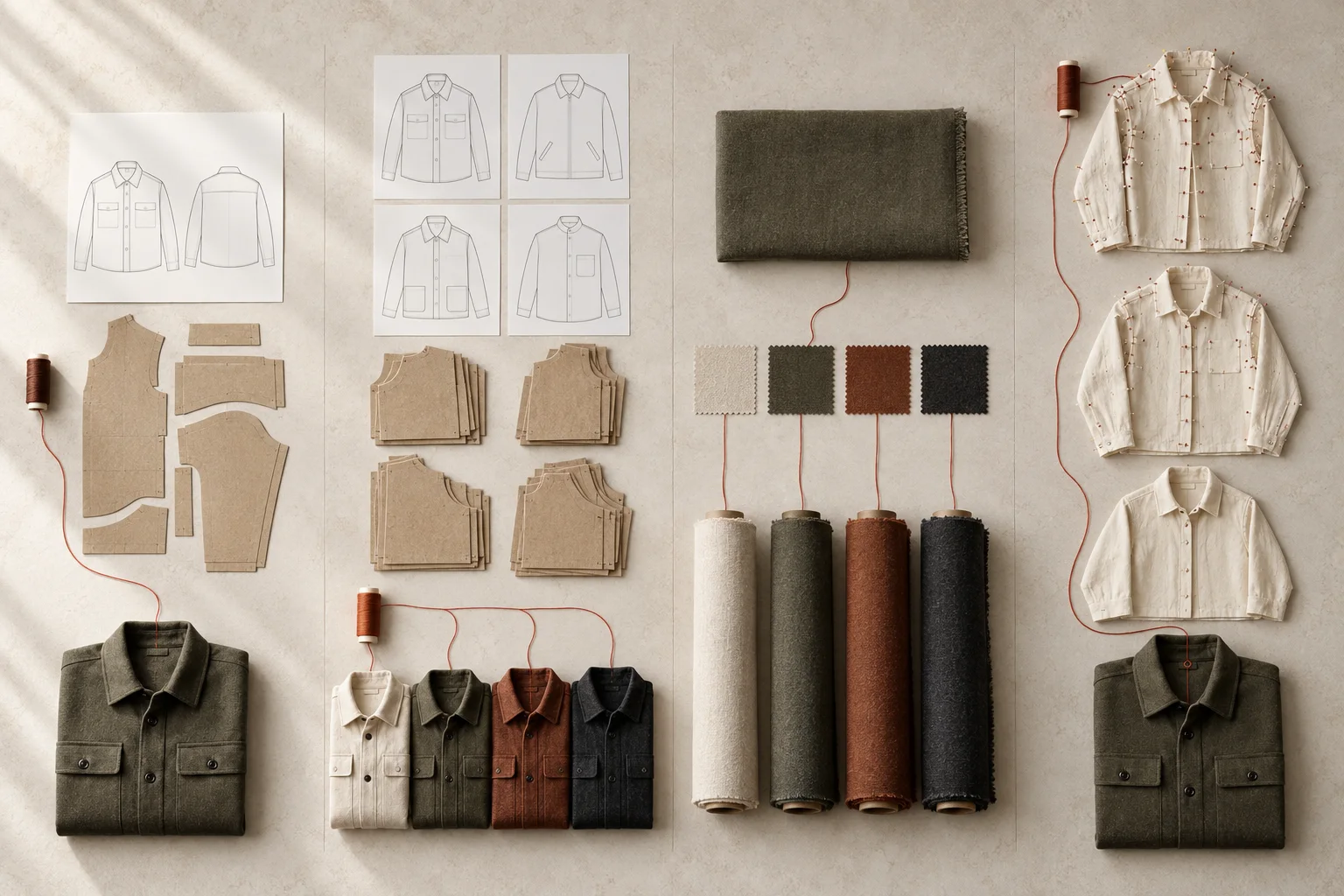
More styles need more patterns and instructions. More colours need more fabric commitments. Unanswered questions can mean more sample rounds.
## 07Allow for sample reviews
Sample rounds answer questions about shape, fit, fabric and construction. Their cost depends on the work in each round and how many rounds are needed. Ask which are included and how further rounds are agreed.
Clear comments help the next sample answer the right question. Record what is approved, what changes and what remains open, using measurements and photographs where useful.
## 08Settle decisions before they cause rework
A change to the drawing is usually easier to handle before the pattern and sample have been made. Later, the same decision can require revised patterns, measurements, samples and approvals.
Changes are sometimes necessary. Ask which completed work the change affects and agree the cost and timing before it goes ahead.
## 09Choose details with their making cost in mind
Pockets, linings, fastenings, embroidery and special finishes add different kinds of work. Their effect depends on the construction and supplier. A plain-looking garment can still be demanding to develop or make.
Choose the details that matter to how the clothes look and work. Cost them while the design is open, so a late reduction does not remove the feature that made the product worthwhile.
## 10Keep work that can be reused
Approved patterns, measurements, material references and making instructions may help with a later collection or repeat order. Their value depends on whether the new work suits them and whether the brand has the right to use them.
Agree the files, records and usage rights you will receive. Keep clear versions so the next team can distinguish the current approved work from earlier drafts.
## 11Reduce the work before cutting the checks
Useful options include fewer styles, fewer colours, suitable shared materials and earlier decisions. Ask how each option changes the work, the collection and the total commitment.
Fit, material and production checks help establish whether the product is ready. Agree an appropriate checking plan rather than treating an untested assumption as a saving.
## 12Agree the scope and fees
Studio’s scope, fees and payment milestones are agreed in the proposal before work starts. Development, production and third-party costs are identified separately so you can understand the commitment.
Bring the products you are considering, any references and your budget or timing if known. If you are starting with an idea, that is enough for a [first conversation](https://surajmalstudio.com/enquire). We can help establish what needs to be scoped.
[Subscribe to new guides on the website.](https://surajmalstudio.com/guides/what-drives-development-cost)
Working on a range
Get help turning the next decision into a practical plan.
[Talk about your idea](https://surajmalstudio.com/enquire)
## Read next
### [Planning your first collection](https://surajmalstudio.com/guides/planning-a-first-range)
Choose which pieces to make, how they work together and which fabrics suit them.
### [How many samples come before production?](https://surajmalstudio.com/guides/how-many-samples-before-production)
There is no fixed sample count: the number follows the checks needed to approve the design, fit, sizes and finished clothes before production.
### [How to compare clothing manufacturer quotes](https://surajmalstudio.com/guides/comparing-clothing-manufacturer-quotes)
Compare the same product and scope, make exclusions visible and resolve open questions before choosing a manufacturer. Includes a blank comparison sheet.
### [What sits between a quoted price and the clothes arriving?](https://surajmalstudio.com/guides/what-does-a-first-order-cost-to-land)
The full cost of clothes arriving includes the maker’s price and any transport, import, delivery and receiving charges left outside the quote.
Read next [Planning your first collection 4 min read · Planning your collection](https://surajmalstudio.com/guides/planning-a-first-range) [How many samples come before production? 4 min read · Developing your product](https://surajmalstudio.com/guides/how-many-samples-before-production) [How to compare clothing manufacturer quotes 4 min read · Costs, orders and delivery](https://surajmalstudio.com/guides/comparing-clothing-manufacturer-quotes) [What sits between a quoted price and the clothes arriving? 4 min read · Costs, orders and delivery](https://surajmalstudio.com/guides/what-does-a-first-order-cost-to-land)
---
[View this page on the website](https://surajmalstudio.com/guides/what-drives-development-cost)