---
title: "What is a lab dip, and how is production colour checked?"
description: "Colour is approved on a small dyed fabric sample, then checked in the fabric made for the clothes against that sample and agreed acceptable differences."
url: "https://surajmalstudio.com/guides/what-is-a-lab-dip"
---
# What is a lab dip, and how is production colour checked?
4 min read Developing your product Updated 10 Sept 2026
Colour is approved on a small dyed fabric sample, then checked in the fabric made for the clothes against that sample and agreed acceptable differences.
## Quick answers from this guide
### Why does production colour need checking after a lab dip is approved?
The first approval accepts a small trial dyeing on the fabric chosen for the clothes. The later check compares fabric dyed for the order with that approved sample and the agreed acceptable differences. Separate batches and rolls can still vary after a successful trial.
### Can a colour number or a screen image settle the colour of the clothes?
A colour number identifies a target, and a screen image can communicate an initial direction. Final approval needs a physical dyed sample on the fabric chosen for the clothes. Screens vary, while the fibres, surface and finish of fabric affect how its colour appears.
### Why should matching fabrics be checked under different lights?
Two fabrics can match under one light and differ under another because they reflect light differently. Check fabrics that meet on the clothes together under agreed daylight and any relevant shop or warm lighting. Record visible differences and decide whether they are acceptable before approval.
### What needs to be recorded when a colour is approved?
Keep the approved dyed sample with the physical colour reference and a record identifying the sample version, fabric reference and approval date. Record the lighting and acceptable differences. One named decision-maker and a shared record give the maker a clear basis for later comparisons.
### Does approving a colour also settle whether it will last through wear and washing?
Approving the appearance of a colour does not settle how it performs through use. Review the required tests alongside the colour before approving dyeing for the order. Washing, rubbing, light or perspiration may matter, depending on the clothes. Some shades make meeting both requirements harder.
A lab dip is a small trial dyeing of the chosen fabric to a proposed colour. Accepting that trial and checking fabric dyed for the order are separate decisions; repeat trials or checks across several batches may also be needed.
The first decision gives the maker a physical colour to follow. The second checks whether the fabric that will become the clothes stays within the agreed acceptable differences. A successful trial cannot promise that every later roll will look indistinguishable.
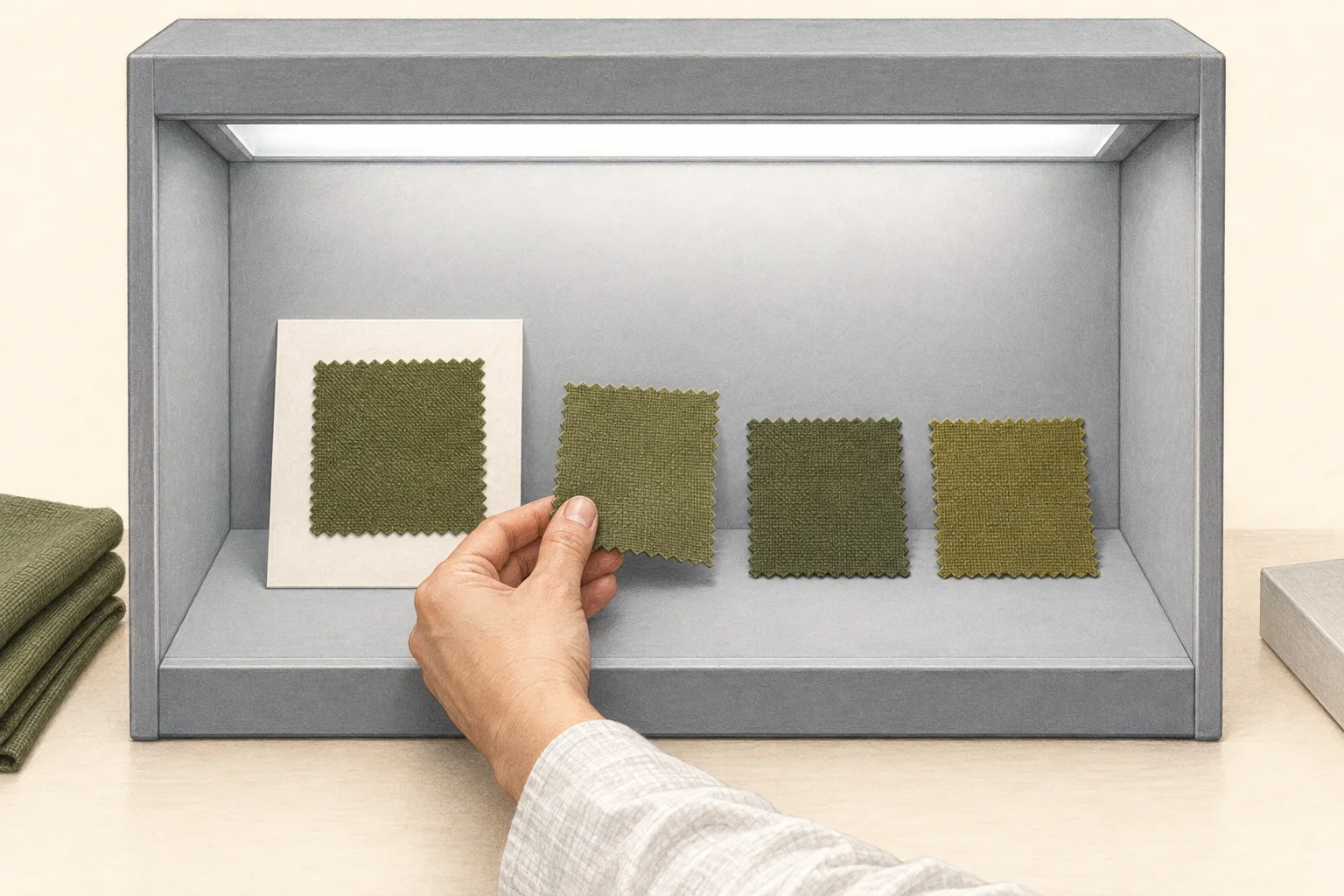
Studio illustration Compare candidate dye samples with the agreed target under the agreed viewing conditions. This illustration is not a colour standard; approve a physical reference for the intended fabric.
## 01The first approval must use the fabric chosen for the clothes
The maker starts with a physical colour reference and a description of the fabric, then prepares one or more small dye trials. Compare each trial with the reference. The response can be approval, rejection or a request for a specific change, such as lighter or less red. Each new trial should answer the recorded feedback from the previous one.
The fabric matters as much as the reference. Its fibres and the way it is made affect how the colour appears, as do its weight and finish. A trial on substitute cloth can help an early discussion. Keep that decision provisional until the colour has been checked on the fabric chosen for the clothes. The same dye recipe can behave differently on a different fabric.
Choosing a colour number is therefore a starting point. A physical dyed reference gives the maker something to place beside the trial. A screen image or a paper colour can communicate a direction, but neither settles the final fabric colour. For a colour the brand already has on its chosen fabric, retain a piece as the reference for subsequent comparisons.
## 02Lighting can change whether two colours look like a match
Compare the reference and the trial side by side under agreed lighting. A controlled daylight setting gives the comparison a consistent basis. Also check under any shop or warm lighting relevant to the clothes. Two pieces can look alike in one light and visibly different in another because they reflect light differently.
This becomes especially relevant where fabrics meet. Place the main fabric beside the collar or other material that needs to match it. Separate approvals can miss a difference that becomes apparent when the pieces are together. A collar that matches the body in daylight may look like another shade under a shop light.
Record any visible difference and decide whether it is acceptable. If it is not, the next step may be to change the dyeing method or the material. A colour measuring instrument can support the visual comparison by recording the difference numerically. Where the maker uses one, agree the measuring method and acceptable limit. The reading supports the decision; the clothes still need to be assessed by eye under the relevant lights.
## 03The later check sets boundaries for the fabric being cut
The approved trial establishes the target for dyeing the order. It does not make every roll identical, especially when fabric comes from separate dyeing batches. Agree how much lighter or darker the fabric may be while still being acceptable. Keep physical examples of those limits with the approved target so everyone checks against the same boundaries.
Fabric rolls can then be compared with those examples and grouped by compatible colour before cutting. This helps prevent a front, sleeve and collar from showing noticeable differences within the same piece of clothing. Record which dyeing batch and roll the fabric came from, and keep those references through checking and cutting. They allow a colour difference to be traced back to the fabric involved.
The later check is a comparison with an existing decision. If the target or acceptable differences were left vague, each roll invites a fresh judgement. Set those boundaries before dyeing the order. For a repeat order, discuss continuity before placing it and compare the new fabric with the retained reference. A previous delivery alone does not settle the colour of the next one.
## 04Colour approval includes how the dye holds up in use
A shade can look right beside the reference and still need checking for how it performs when the clothes are used. Review the required tests alongside the appearance of the colour, before approving dyeing for the order. Washing and rubbing may matter; exposure to light or perspiration may also need checking, depending on the clothing and its use.
Some shades are harder to achieve while meeting the expected performance. Leaving those checks until after the colour decision can create a late choice between the appearance and how well the dye holds up. Reviewing both together leaves room to adjust the dyeing method or agree an acceptable result. Keep the required tests and their approved results with the fabric details so the appearance and performance decisions refer to the same fabric.
## 05A written approval must identify the physical sample
An email saying “approved” leaves too much open if several colours or revised samples are circulating. Identify the sample version, the fabric reference and the date. Keep the physical target, approved trial and comments together, along with the agreed lighting and acceptable differences. Protect the retained fabric so it remains usable for later comparisons.
Give one named person responsibility for the final decision and set a deadline for feedback. Bring comments into one record before sending them to the maker. “Too yellow” identifies a correction; “please match better” leaves the adjustment unclear. New or demanding shades can need further trials, and each round should narrow a specific difference from the target.
An unresolved colour can hold up fabric booking, dyeing and cutting. The useful approval is precise enough to let the next step proceed: a named sample on the chosen fabric, an agreed basis for checking it, and a record that stays with the order.
[Subscribe to new guides on the website.](https://surajmalstudio.com/guides/what-is-a-lab-dip)
Working on a range
Get help turning the next decision into a practical plan.
[Talk about your idea](https://surajmalstudio.com/enquire)
## Read next
### [Does a manufacturer need a tech pack before quoting?](https://surajmalstudio.com/guides/do-i-need-a-tech-pack)
A maker needs clear written instructions to quote meaningfully; unfinished choices can stay open if the quotation records its assumptions.
### [Getting colour right, twice](https://surajmalstudio.com/guides/colour-and-lab-dips)
Colour needs approval on the chosen fabric, then checking across the fabric made for the order, using shared physical references and agreed lighting.
### [What changes when you own the pattern](https://surajmalstudio.com/insights/2026/08/what-changes-when-you-own-the-pattern)
Patterns, grade rules, specifications and sealed samples are what make a garment portable between makers, and who owns them should be settled in writing before development starts.
### [What is a grade rule?](https://surajmalstudio.com/guides/what-is-a-grade-rule)
A grade rule sets the measurement change between clothing sizes; this document explains how to choose, check and record those changes before production.
Read next [Does a manufacturer need a tech pack before quoting? 5 min read · Developing your product](https://surajmalstudio.com/guides/do-i-need-a-tech-pack) [Getting colour right, twice 7 min read · Developing your product](https://surajmalstudio.com/guides/colour-and-lab-dips) [What changes when you own the pattern 15 min read · Developing your product](https://surajmalstudio.com/insights/2026/08/what-changes-when-you-own-the-pattern) [What is a grade rule? 4 min read · Developing your product](https://surajmalstudio.com/guides/what-is-a-grade-rule)
---
[View this page on the website](https://surajmalstudio.com/guides/what-is-a-lab-dip)