From pattern to approved sample
Treat the base pattern, fit approval, grade rule, size set and production sample as one connected sequence of decisions.
Quick answers from this guide
Which question belongs to the proto, fit sample, size set, pre-production sample and production sample.
The proto tests whether the design has become a convincing garment, fit work settles the base size, grading derives the other sizes, the size set tests those derived garments, pre-production establishes the complete standard and the production sample tests fidelity to it.
How the base size is established and approved before the other sizes are derived.
The base size is the pattern from which the size range will be derived. Approve it only when silhouette, fit and measurement record agree, then record the approved pattern version, sample and fitting conditions together.
What a grade rule controls, and why it is not a uniform enlargement.
A grade rule describes how each pattern point and controlled measurement changes between sizes. It is not a uniform enlargement because bodies, design ease, details and construction relationships do not all change at the same rate or in the same direction.
How a size set tests fit, proportion, movement and feature placement away from the base.
The size set puts selected derived sizes on bodies to test whether fit intent, silhouette, movement and feature placement survive away from the base. The pre-production sample then brings approved material, colour, components, labels, construction, finish and fit together as the production standard.
How to keep approved patterns, specifications and physical samples aligned through production.
Keep comments, pattern versions, specifications and physical samples traceable, remove superseded references as competing instructions and compare production evidence across sizes against the approved size set and assembly standard.
On this page 6 sections
- Settles
- Construction feasibility and the first pattern
- Rests on
- The tech pack and product brief
01Treat sampling as one decision sequence
A pattern becomes an approved product through a sequence of questions. The proto tests whether the design has become a convincing garment. Fit work settles how the base size relates to the intended body. Grading derives the other sizes according to an agreed rule. The size set tests whether those derived garments preserve the approved idea. Pre-production brings fit, material, construction and finish together as the standard production must hold.
These are not separate administrative gates. Each decision supplies the premise for the next. A grade cannot repair an unresolved base pattern because every derived size inherits its relationships. A polished pre-production sample cannot establish the size set if only its base size has been considered. A production sample cannot become a new design reference without reopening everything that depended on the approved one.
Approach each sample by naming the question it can answer. Inspect the evidence relevant to that question, record the decision and identify any dependent work that must follow. Approval can be affirmative, rejected or conditional on a specific correction, but it should never be general. A narrow approval makes the development history readable.
Keep references aligned with the sequence. The design brief governs intent, the current pattern governs shape, the measurement specification governs controlled dimensions, approved materials and components govern the assembly, and signed samples demonstrate the resolved whole. When references disagree, stop and decide which one is current before another sample is made.
02Establish the base size in the proto
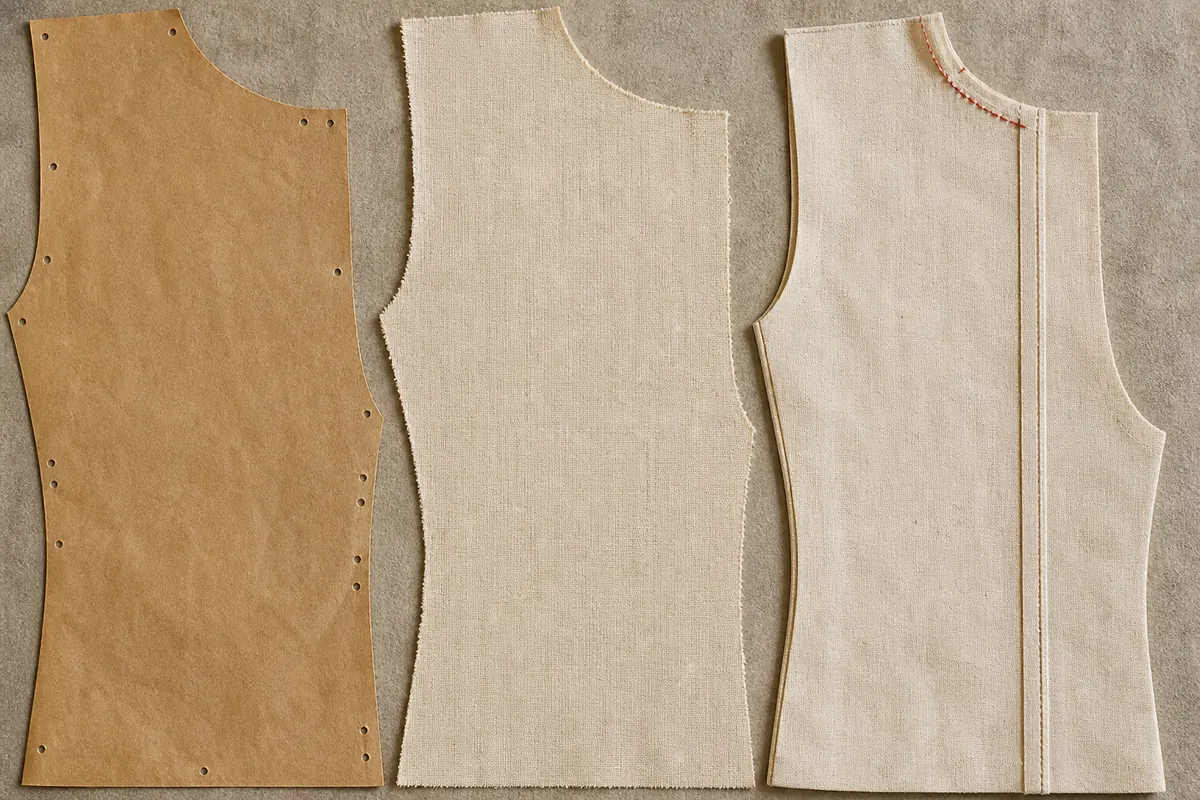
The base size is the pattern from which the size range will be derived. It is the place where design proportion, fit intent and construction first meet on an intended body. Selecting it is therefore part of product strategy as well as pattern work. It should be a size that can be fitted consistently and that provides a sound centre from which the chosen range can develop.
The proto asks whether the pattern expresses the design before refinement is mistaken for correctness. Review overall balance, volume, length, the relationship between front and back, the placement of major features and the way the material supports or resists the silhouette. Move around the garment and observe it in use. A static front view cannot reveal the full pattern.
- Proportion before measurement
- Read the relationships causing the visible issue before changing an isolated dimension. A local correction can move a symptom while preserving its cause.
- Material evidence
- Use proto cloth close enough in weight, stretch, recovery and drape to support pattern observations. Record where it differs from the intended quality.
- Construction that affects form
- Review seam position, opening type, pocket volume, internal support and component weight wherever they alter how the pattern hangs or moves.
- Controlled corrections
- Link each requested change to an observation and state what must remain untouched around it. The next sample should answer whether the revision carries the intended idea.
03Approve fit before deriving sizes
Once the garment idea is working, fit asks how the base size relates to the intended wearer. Establish the fitting conditions so comparisons remain useful: the intended body or form, relevant underlayers, fastening state, styling position and movements should be consistent with the product’s use. Fit observations change when those conditions change.
Start with balance and placement. Check where the garment settles, whether its key lines are level or intentionally displaced, whether volume is distributed as designed and whether openings remain in position. Then examine ease, mobility and local contour. This order preserves the whole garment while individual points of measure are refined.
Distinguish body accommodation from design ease. Body accommodation allows the wearer to enter, stand, sit, reach and move according to the garment’s purpose. Design ease creates the intended silhouette beyond that requirement. Combining the two into an unexplained total makes later grading difficult because their behaviour across sizes may not be the same.
Review the pattern and measurement specification together. A point of measure needs a reproducible location and method, while the pattern needs the shapes and relationships that create it. If the garment measures correctly but hangs incorrectly, a measurement alone cannot approve the pattern. If the garment looks right but cannot be measured consistently, production control remains weak.
- Balance
- Check how the garment settles around the body and whether front, back and side relationships support the intended stance.
- Placement
- Review necklines, shoulders, waist positions, openings, pockets and other landmarks in relation to both body and silhouette.
- Ease and movement
- Separate the room needed for use from the volume chosen for design. Test the movements that belong to the product’s purpose.
- Material response
- Observe stretch, recovery, drape, collapse and support during wear. Decide whether the issue belongs to cloth, pattern or their interaction.
- Measurement control
- Confirm that each critical dimension has a clear point and method of measure. The specification must describe the approved garment consistently.
Approve the base only when its silhouette, fit and measurement record agree. Record the approved pattern version, sample and fitting conditions together. This package becomes the source for grading, so ambiguity at this point is reproduced rather than resolved.
04Build and review the grade rule
A grade rule describes how each pattern point and controlled measurement changes between sizes. It is a set of related increments, not a uniform enlargement. Bodies do not change at the same rate in every direction, and design details do not all need to move with the body. The rule must preserve fit, proportion and function together.
Begin with the intended body framework and size range, then map the garment’s fit intent onto it. Decide which measurements follow body change, which carry design ease and which positions must be redistributed to maintain balance. A loose silhouette still needs a considered grade; generous volume does not remove the relationships between shoulder, opening, length and feature placement.
Review grade directions as well as amounts. A point can move across, down or in a combination that changes a seam angle and the shape connected to it. Pocket placement, neckline shape, dart position, collar length and component locations may need their own logic. Scaling the complete pattern as a picture cannot provide that control.
Preserve the design hierarchy through the rule. If a proportion is central to recognition, decide how it should read across the size range rather than copying the base relationship mechanically. Some details may remain constant, some may change with the garment and others may need optical adjustment.
Check construction consequences while grading. Seam lengths must continue to sew together, notches must remain meaningful, facings and linings must follow the altered shapes, and components must still suit the openings they serve. A grade is not complete when only the outer pattern appears nested correctly.
Apply shared fit principles across related styles without assuming one rule can be copied unchanged. Consistent brand fit comes from a consistent body framework, fitting method and interpretation of ease. Different blocks, materials and silhouettes may require different pattern movement to deliver that consistency.
Produce a measurement specification for the derived sizes and compare it with the pattern nest. The two views should explain the same change. Differences can reveal an incorrect point of measure, an unintended pattern movement or a design feature whose grading logic has not yet been decided.
05Approve the size set and production standard
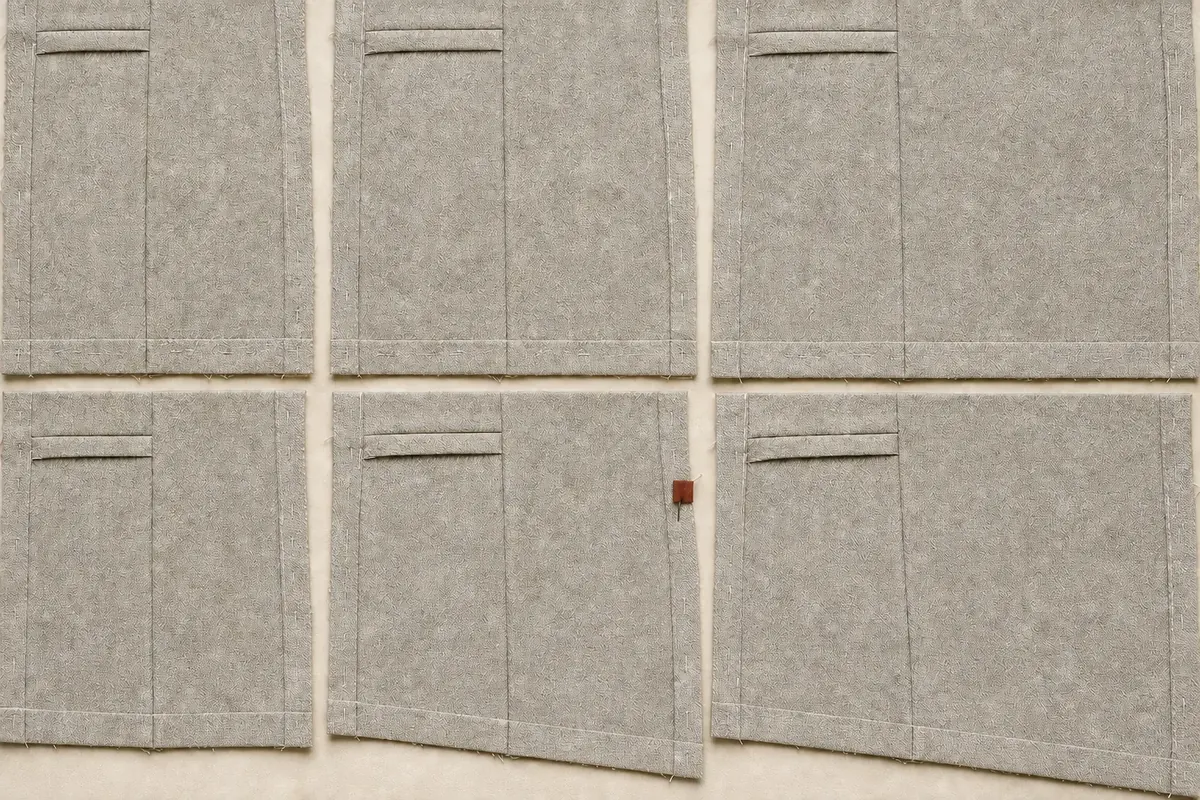
The size set brings selected derived sizes into physical form so the grade can be judged on bodies, not only as nested lines. Its purpose is to test whether the range preserves the approved fit intent, silhouette, movement and feature placement. It is where the grade rule meets material and construction evidence.
Choose review sizes that expose the relationships carrying the greatest risk for the product. The selection should allow the team to see how the garment changes away from the base and whether the grade behaves coherently across the intended range. The decision is driven by the garment and rule, not by a ritual set of samples.
Fit each size under comparable conditions while allowing for the intended bodies represented. Ask whether the same product idea is present, whether movement remains suitable, whether design ease has been distributed as intended and whether details occupy convincing positions. Do not ask every size to imitate the base body; ask every garment to deliver the approved fit logic.
Separate a grade correction from a base correction. If an issue appears throughout the set, return to the base pattern or shared construction. If it grows or reverses as sizes move away from the base, examine the rule. If it appears in one sample, check cutting, assembly and measurement before rewriting the system.
Each fault pattern calls for a different correction.
The pre-production sample then asks whether the fully specified garment is the standard production should reproduce. Review approved material, colour, components, labels, artwork, construction, finish and fit as one assembly. Completion can make a sample persuasive, so compare it with the recorded product promise and approvals rather than with the fact that every part is now present.
Any change at this stage should identify what it reopens. A different cloth can alter measurements and grade behaviour. A revised seam can alter shape and internal dimensions. A component can change weight, opening behaviour or care. Approval is sound when the consequences have been followed back through the sequence.
06Hold the approval through production
The production sample asks whether manufacturing is holding the approved standard. It is a fidelity decision rather than an invitation to redesign. Begin with the features that carry recognition, fit and function, then assess material, colour, workmanship, placement and finish against the controlled references.
Distinguish variation from a changed preference. A difference from the approved sample needs to be assessed against the specification and agreed tolerances. A new aesthetic preference belongs to a later product decision unless it reveals that the approved standard cannot perform its intended function. Keeping those questions separate protects both quality control and development history.
Maintain traceability between comments, pattern versions, specifications and physical samples. Superseded references should not remain available as competing instructions. The current standard needs a clear identity so that an observed difference can be connected to the decision that governs it.
Review production evidence across sizes, not only in the base. Cutting, handling and assembly can interact differently with the shapes created by the grade, and a workmanship issue can appear as a fit issue when it changes seam length or balance. The approved size set provides the reference for recognising that distinction.
The process is complete when production can reproduce the approved product family: one fit intention expressed through a controlled base pattern, a coherent grade, verified derived sizes and an assembly standard that remains legible on the line. Each stage has answered its own question, so the final approval rests on a chain of evidence rather than a single convincing sample.