Why we ask for a retail price before we draw anything
The retail price is a design constraint, and it decides more than the fabric does.
On this page 4 sections
01Set the intended selling price early
Intended retail price belongs in the brief before the first garment is drawn. It is a design input because it governs which materials, operations and selling choices can coexist.
Leaving retail price out of the brief removes a necessary commercial constraint. A garment does not become more creative because its commercial conditions are unknown. It becomes easier to over-specify. When the cost is finally tested, the design is forced through a series of isolated reductions: lighter fabric, fewer operations, standard trims, a changed wash. The drawing survives while the reasons it felt resolved are stripped away.
Retail price sets the room available for channel margin, landed cost and product choices.
- 01Retail price
- 02Channel margin and tax
- 03Target landed-cost ceiling
- 04Fabric, trims, construction and finish
4 stages · 3 constraints follow retail price
02Allow for the whole route to the customer
Working backwards starts with the full route to market. Retail price is not the amount available for cloth and sewing. The commercial model must also carry the channel, taxes, fulfilment, returns, packaging and the margin needed to operate. The resulting target garment cost becomes a boundary for design. The commercial model must be explicit enough for a drawing to be costed against it.
That boundary works through the garment. Fabric is specified by composition, construction, finish and gsm, meaning grams per square metre. Weight affects cost, but it also affects opacity, warmth, drape and how a seam behaves. CMT, the cut, make and trim portion of the garment cost, reflects the labour and operations needed to assemble it. A lined body, bound internal seams, shaped pockets and special fastenings each change both appearance and construction.
Costs accumulate across interacting decisions. A single detail may fit comfortably within the target. Several details, each approved in isolation, may not. Custom hardware can introduce its own development and ordering conditions. A garment wash may alter measurements, which requires a shrinkage allowance, the extra pattern provision made so the washed garment returns to target. A fabric that looks efficient at first may demand careful handling or additional finishing. Cost lives in the interaction of decisions.
03An example: choosing overshirt details
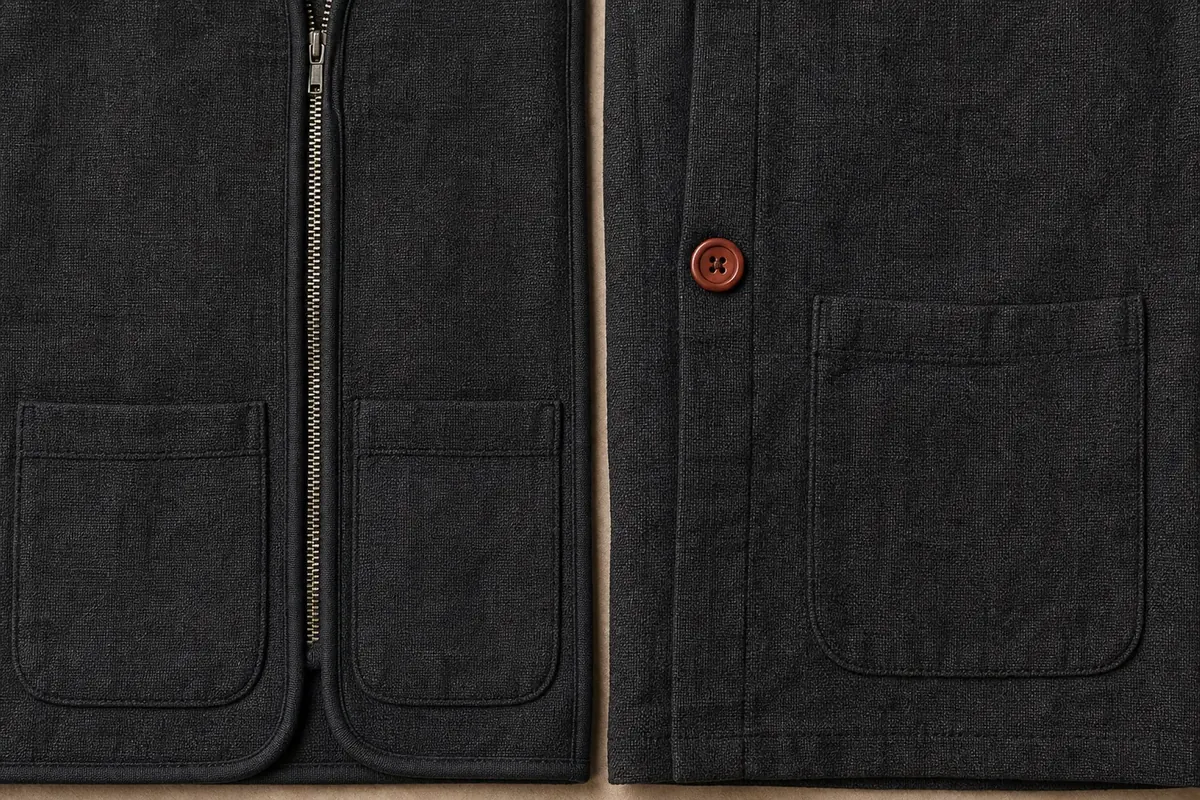
Consider a relaxed overshirt intended to sit at an accessible position in its category. The first concept uses a substantial cotton twill, a garment wash for a broken-in hand feel, a metal zip beneath the front, patch pockets with internal compartments, and clean binding throughout. None of those details is inherently excessive. Together they describe a product with a different cost structure from a straightforward unlined layer.
If the price is known, the design team can decide where the value should be felt. The twill and wash may carry the proposition, so they remain. The concealed zip may add complexity without improving how the garment is worn, so a well-chosen button can replace it. Internal binding may be reserved for visible areas. The pocket can keep its useful volume without a second compartment. The result is designed around priorities, not reduced after attachment has formed.
04Check costs before approving samples
If price arrives after the proto, the early sample used to test pattern and construction, every change has a second cost. The pattern may need revision. Pocket placement can shift when construction changes. The washed sample no longer represents the approved route. A new trim affects colour and photography. More seriously, the team begins defending features because they have already been seen, sampled and discussed. Sunk effort starts making design decisions.
Late value engineering also damages comparability. When fabric, trim and construction change together, the next sample cannot reveal which change altered the hand, fit or appearance. A cheaper cloth may shrink differently. Removing a facing may change how an edge hangs. Replacing hardware can shift balance on a light garment. Early costing lets those decisions be designed as one route and tested in a controlled order.
The target should be checked against the whole size range as well. Fabric consumption changes with garment dimensions, and marker efficiency, meaning how pattern pieces are arranged on cloth for cutting, varies by style and width. Costing only the most convenient sample size can conceal the pressure created by the actual order mix. A sound estimate states its material and size assumptions so a quotation can correct them.
Price also shapes range architecture. A defining piece may carry a more involved make, while a related jersey or shirt offers a clearer entry point. That is a healthier use of variation than trying to give every garment the same density of detail. The collection can express one position across different constructions without pretending they all bear identical costs.
Put the intended retail position, sales channel and target garment cost into the brief. Cost concepts while they are still concepts. At each development decision, record whether a change affects material consumption, CMT, finishing, packaging or the ability to place an order efficiently. Leave room for verified quotations, because a sketch cannot predict every production consequence.
A late costing asks what can be removed. An early costing asks what deserves to remain.