How to start a clothing brand
Choose a customer, plan a focused collection, develop an approved product and prepare to sell. A practical starting point wherever you want to launch.
Quick answers from this guide
Who should your first collection serve?
Start with a specific customer and a situation in which they will wear the clothes. Speak with people who match that description and learn from what they already buy and use.
What belongs in a launch budget?
Separate product development, stock and delivery, and the work needed to launch and support customers. Ask when each commitment is payable and what must be approved first.
What should you prepare before speaking to a studio?
Describe the customer, proposed products, first market and sales channel, available budget, timing and work already completed. Make the decisions you need help with visible.
On this page 6 sections

01Choose a customer and a reason to buy
Start with a person and a situation. Who will wear the clothes, when will they wear them, and what would make your product worth choosing? “People who like fashion” is too broad to guide a collection.
Speak with people who match that description. Ask about the last similar garment they bought, what they wear it for, what frustrates them and which alternatives they considered. Their past choices are more useful than a polite answer to “Would you buy my idea?”
02Build a focused first collection
Choose the products that express that idea most clearly. Each style should have a reason to exist: a particular use, a different fit need or a useful companion to another garment. There is no universal correct number of styles.
Remember that every colour and size adds decisions about material, fit, quantities, photography and stock. Start by making the proposed range understandable, then check whether you can develop and support it.
Use a first collection plan to write down what each product does and which decisions can be shared.
03Plan the work and the spending
A garment quotation is only part of the launch. Keep the work needed to develop the product separate from the cost of making the stock. Add the work needed to sell it and serve customers.
Develop the product
Collection design, specifications, patterns, samples, fit work and relevant testing.
Make and deliver it
Materials, production, inspection, packaging, transport and applicable import costs.
Launch and support it
Identity, product photography, the store, marketing, fulfilment and customer support.
Ask when each commitment becomes payable and what must be approved first. Keep room for revisions and unresolved costs. A launch date should follow a credible development and delivery plan; it should not depend on every first attempt being approved.
For a closer breakdown, read what affects design and sampling costs.
04Turn the idea into an approved product
Translate the collection into instructions a maker can use: the design, materials, measurements, construction and finishing. A technical specification, often called a tech pack, records those instructions.
Use samples to answer specific questions about appearance, fit, movement and construction. Record comments against an identified sample and document version. Approve the base fit before assuming that the remaining sizes work.
Before committing to production, agree what the approved reference includes and which checks will be carried out. Read the sampling sequence when you reach this stage.
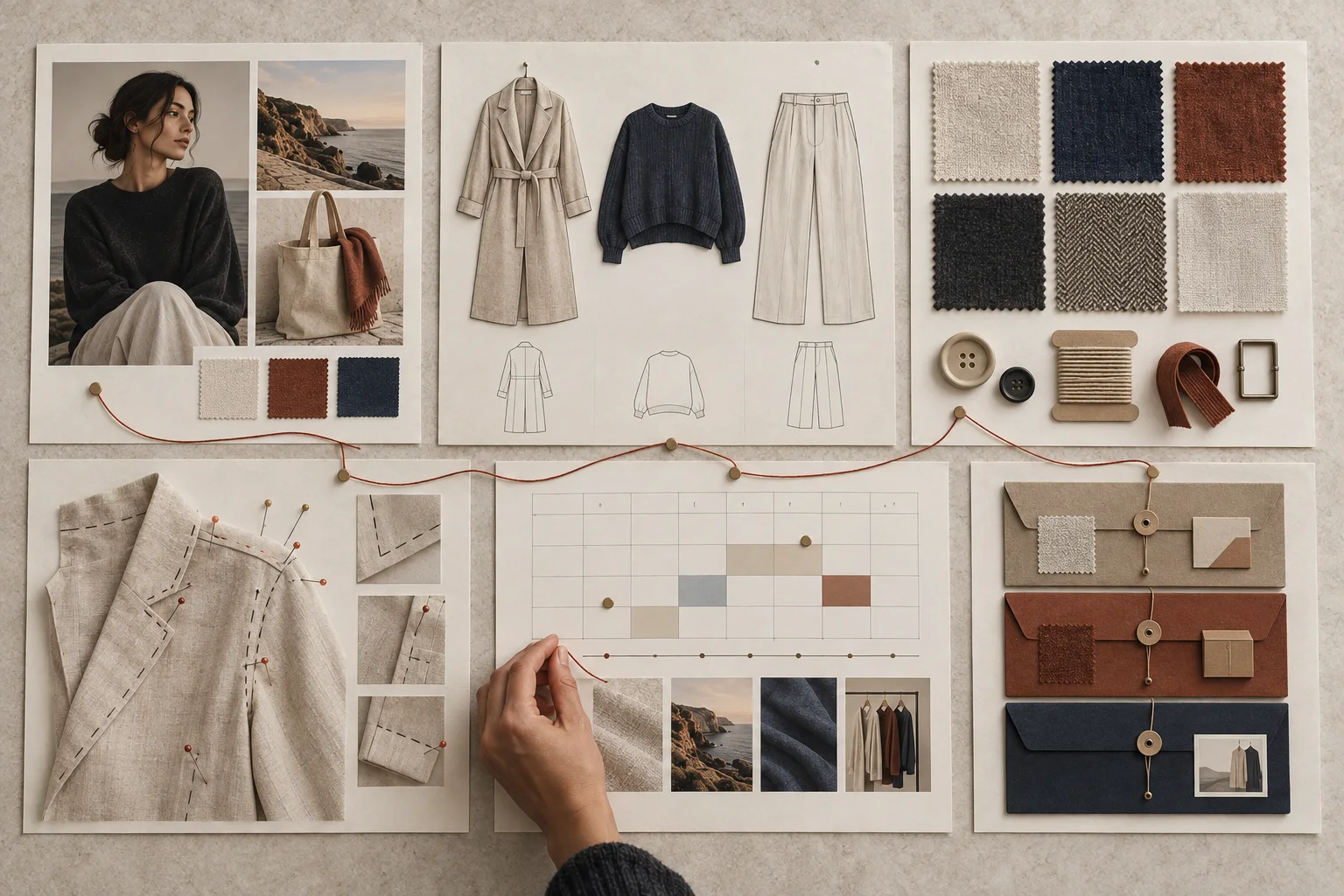
05Prepare the whole buying experience
Choose the first market and sales channel deliberately. Selling through your own store, a retailer or an event changes the product information, inventory handling and support you need.
Prepare clear photographs, fit and size information, care information, delivery expectations and a workable customer-support process. Check product, labelling and sales requirements for the relevant products and destinations with appropriate local support. A worldwide business still makes market-specific decisions.
After launch, record the questions customers ask, reasons for returns, fit feedback and which products they actually choose. Use that evidence before adding more styles or ordering again.
06Write your first brief
You do not need every answer before speaking to a studio. A useful first brief makes the open questions visible.
- The customer and situation you want to serve.
- The products you are considering, with relevant references.
- The first market and the way you expect to sell.
- Your available budget, timing and anything already completed.
- The decisions you need help making.
If you are starting from the idea alone, say that. We can help you decide what needs to happen first and agree the work from there.